

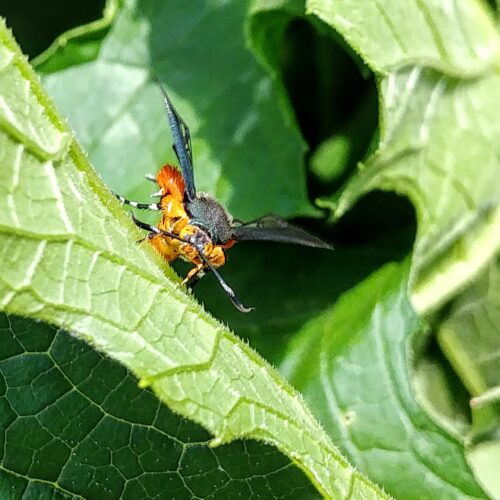
In this post we’ll focus on 10 effective strategies for minimizing Squash Vine Borer (SVB) damage, naturally and without pesticides.
1. Identify the Squash Vine Borer
The squash vine borer is the larva of the moth and it ruins your squash, pumpkins and gourds from the inside out. The moth is black with orange-red markings. The eggs are tiny, brown ovals, about the size of a pencil point! Without knowing what this pest is really up to, you might mistake a squash vine borer moth for a fat wasp.
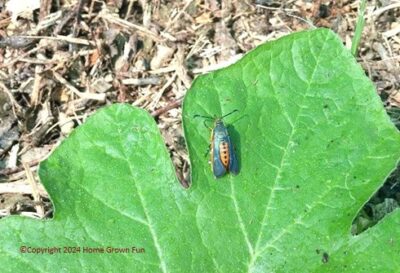
Brave moths fly during the day. The moths have a red body with black dots, almost rubbing it in that they are very daring to zoom around the squash patch looking for stems to lay eggs on.
Eggs turn into pale white, plump larvae with a dark head.
Squash vine borers develop in four stages: egg, larva, pupa and adult (moth). The eggs require an eagle eye to see from ground level so it’s not very realistic to inspect plants from such an awkward angle. Any bloggers that tell you to do so might be moonlighting as contortionists.
Still, if you are bound and determined to “cut them off at the pass” from hatching into larvae, inspect your vines carefully at the base of the plant and run your hands across them to dislodge and damage eggs. Masking tape works well to remove eggs. Eggs that fall to the ground can still hatch.
Family: Sesiidae. Approximate length of moth: .62 in (16 mm), wingspan 1.25in (33mm). Length of Larvae: .50in (12.7mm).
2. Recognize Signs of Damage from the Squash Vine Borer
All it takes is a single brown egg laid on the vine, usually around the base to create a hungry larva that will bore inside the stem to feed. In the process, it leaves a sawdust-like waste product on the plant and on the ground. The cream colored worms eat for 14-30 days until they exit the plants, burrow into the soil, and form their cocoons.
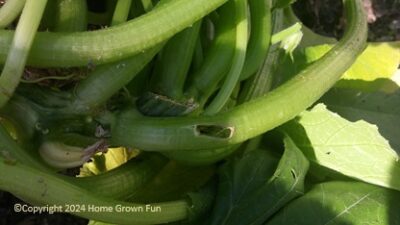
We could call the damage, “Plant Interrupted”. The plant wilts. It becomes impossible for water and nutrients to move up the plant because the vines are essentially scraped out by these voracious feeders. Once larvae enter your plant it is very difficult to stop the destruction.
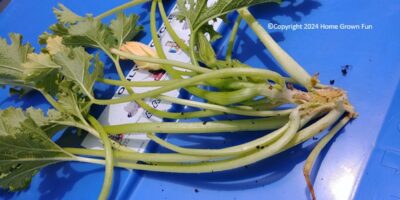
Damage from squash vine borers can be catastrophic. Reports show that commercial squash farmers can expect at least 25% of their squash crops sacrificed to the squash vine borer (Ghidiu 2005, Bauernfeind and Nechols 2005). The home gardener doesn’t get off that easy. Squash vine borers can wipe out 100% of your home grown squash. This pest deserves your attention!
3. Understand which plants Squash Vine Borers Target
Squash vine borers prefer large stemmed plants. Cucumbers, watermelon, cantaloupe, and gourds are less favorited as hosts.
Tell the different between squash bugs and squash vine borers
Lots of gardeners blame the squash bug for killing their vines. That is a different pest. In many cases, the squash bug is not the culprit. The squash vine borer is the villain.

4. Time your plantings to not coincide with the lifecycle of the squash vine borer.
Plant strategically. Two generations of squash vine borers happen each year in warmer climates. Cooler locations support only one generation. Because the moths start laying eggs in early summer, in warmer climates it is best to get a jump start on planting so that your vines have had time to mature a bit before eggs are deposited.
Older plants have a better chance of surviving an attack, especially those that put down roots all along their stems. Damage cold occur near the base of the plant but the squash can continue to grow full term.
5. Avoid Pesticides
Do not apply insecticides. We home gardeners are fortunate that we can give each plant personal attention. We do not need to spray an entire field with poisons. Read about squash vine borer prevention in farming trade magazines and you’ll discover it is not uncommon for commercial operations to spray chemicals on the plants every 6 weeks. Beneficial pollinators are at risk if spraying is done during the flowering period.
Neem can harms bees and other beneficial insects. The University of California and the University of Massachusetts considers Neem Oil as moderately toxic to bees. I don’t recommend using it, but if you do these agricultural extensions emphasize it’s best to apply only during late evening, night or early morning if blooming plants are present.
6. Cover the plant stems with fabric, diatomaceous earth and/or soil.
Protect the base of the plant and/or use row covers. Cover the vines near the base of the plant with a lightweight shade cloth, foil or strips of nylon stocking. This will throw the mother moths off as they look for spots to deposit eggs. It will also make it difficult for larvae to burrow inside.
Cover the entire plant to protect them from the egg laying moths. Use a lightweight fabric or commercial row covers. These covers help your squash get off to a good start especially if a surprise frost or heat wave strikes. You must remove them after the first female flowers appear to encourage pollination.
Dust the plant stems with Diatomaceous Earth (DE)
In these series of videos I show you how I applied DE to lessen the damage of the SVB.
Part 1 Saving Squash from the Squash Vine Borer
Part 2 Saving Squash from the Squash Vine Borer
Part 3 Saving Squash from the Squash Vine Borer
Keep in mind, you should not breathe in DE dust and you must be careful when applying near bees. Although the hair on bees sort of protect them from being damaged by the desiccating effect of DE, it is wise to apply when bees are not present and to minimize drift. Do not apply on windy days and do not allow to contact water sources that bees and beneficials may drink from.
7. Grow resistant varieties of squash and pumpkin
Grow rooting and butternut varieties. Many heirloom squash varieties spread by lots of multiple roots. This allows you an opportunity to rely on rooting runners to keep your squash alive even after being attacked by the squash vine borer. Butternut types are naturally resistant to the squash vine borer. If you like varieties that tend to be favored by the squash vine borer, grow them and use the techniques listed above to protect your squash.
Examples of squash believed to be more resistant to squash vine borer damage:
- Dickenson Pumpkin
- Green-Striped Cushaw
- Lemon
- Summer Crookneck
- Waltham Butternut
Squash More Susceptible to Damage from the Squash Vine Borer (Partial List)
- Hubbard
- Zucchini
8. Cut the larvae out of the stems
Yes, I have taken a razor blade and scored the stem, then with a wire bent on the end pulled the larvae out of the stem. If you bury the damaged stem with soil it may recover.
9. Dispose of Squash Vines Properly
Recycle old squash vines carefully. If you experience problems with squash vine borers, compost spent plants to prevent future generations. Larvae burrow shallowly, therefore a light cultivation of the soil and mulch will disturb their progress.
10. Reduce the SVB Moth Population
Catch them with a net. Dispose or relocate them. One moth can lay 150 eggs so it will make a big difference if you can remove just one. Squash vine borers overwinter in cocoons in the soil. Rotate your crops and don’t plant squash or zucchini in the same location.
By implementing these natural methods, you can effectively control and prevent squash vine borer infestations, ensuring a healthy squash harvest and enjoyable gardening experience.
