


Unless your garden shows extreme signs of distress, aphids can be managed without chemicals or even natural sprays! Many times, a strong steam of water, a small brush or doing nothing is the best approach!
How to Tell if the Pest is an Aphid:
Aphids are soft-bodied, small-headed insects with a pear shaped body. They suck the life out of all kinds of plants including trees, flowers and edibles. Leaves can turn yellow or brown – or curl up like a giraffe’s tongue! They might resemble other bugs but their signature body parts are the two cornicles on their rear ends (actually the back of the abdomen).
The cornicles can be short or long depending on the type of aphid. Honeydew is not excreted from them (that comes out of the aphid’s anus). Cornicles release defensive and signaling substances called pheromones that can be used to alarm other aphids of an attack from a natural enemy.
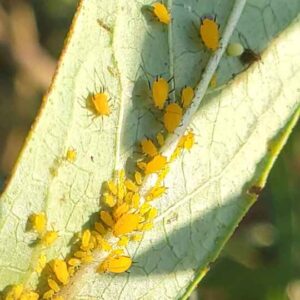
Whiteflies have white-colored wings and fly away when disturbed. Aphids stick around the leaf or stem when startled. They shed exoskeletons when they grow. You might see these white skins near an aphid colony – they are not adult whiteflies. Mites, mealybugs and scale do not look like aphids.
This post gives you the most enlightening information from university agricultural extension research papers and science publications.
If you’re looking for instructions on how to spray chemicals, neem oil, or even insecticidal soaps, you won’t get them here. Those concoctions will upset the balance of your ecosystem!
The Aphid Flowchart
Use the handy flowchart below to find out how to get control over an aphid outbreak without harsh chemicals or harmful homemade sprays.
You’ll reduce risk to your plants and save the beneficial insects that eat aphids and pollinate your garden.

10 Aphid Characteristics that will Change the Way You Treat Aphids and Your Garden
1. Plants can survive an aphid attack without human intervention.
If you see a few aphids on your plants don’t assume your plant is doomed. Healthy crops grown in healthy soil, and watered appropriately, will be able to fight off the damage aphids inflict.
If you grew the infested plant in old soil that was full of chemical fertilizers last season, you may have done the plant a disservice. That soil is dead or almost dead and pests prey on suffering plants. Make a note for next year to stop using chemically fertilized potting soil. Instead, use compost amended potting soils that contain no synthetic fertilizers.
Amend the soil for your current plant to improve soil texture and give it a gentle nutrition boost. Worm castings work great for this. Do not overfertilize with nitrogen. #10 will explain why.
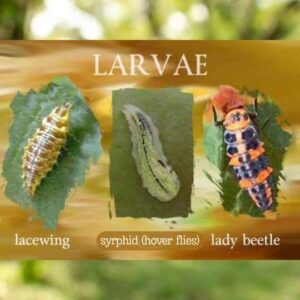
There are also secret agents in your garden that may have everything under control – but maybe not as much control as you would like. Lacewings, syrphid flies and lady beetles have babies and those larvae love to nurse on aphids. Adult lady beetles can also gobble up their share.
If you see creatures that look like the below larvae, let them live, let them eat!
2. Most aphids can’t fly and are terrible climbers.
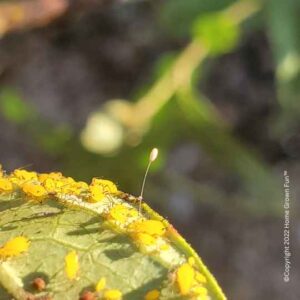
The majority of aphids in a colony do not have wings. These wingless, weak pests stay on one plant their entire life cycle. They don’t move quickly and won’t fly away when disturbed. If they get knocked off a plant they won’t be able to get back on to feed. If you use a strong spray of water and send them to the ground, they will most likely starve to death.
A small percentage of the aphid population will grow wings, so they can expand to other hosts, especially when warm weather hits or when there is a shortage of food. The force of the stream of water will damage the winged aphids too.
3. Releasing lady beetles near an infestation may not do much good.
Studies prove lady beetles, aka “lady bugs” are definitely your friends in the garden but they are not super heroes, especially the ones they sell at the store. Research shows the natural predators in a garden have a hard time catching up to the growth of aphids.
I once had an educational conversation with the son of a lady beetle farmer! Lady beetles sold to gardeners tend to disperse upon release, especially if not locally sourced. Still, it’s hard to resist the fun, suspense and hope in releasing them. If you’re going to take a chance on store-packaged lady bugs, experts suggest first water the garden at dusk and then let go of the batch.
Check out our fun post about lady beetles here where a lady beetle tells you how it feels.
4. All aphids are capable of carrying plant viruses.
It only takes one aphid to make a plant sick with a virus. A virus can stunt growth and hinder flower and fruit production. Instead of trying to kill every aphid, a more realistic approach, beyond prevention of course, is to weigh the damage and the risks involved in keeping the plant around.
Certain crops like squash, cucumbers, pumpkins, melons, beans, potatoes, lettuce, beets, chard and bok choy are more prone to aphid viruses. This is important to consider since the seed from a plant infected with the virus would not be good to keep or share with others.
As the flowchart shows above, a decision needs to be made if one of the mentioned plants shows severe signs of damage. It might be best to destroy the plant.
5. Spraying chemicals or even homemade concoctions can set you back – BIGTIME!
Another important tip to consider is that early spraying of natural or synthetic chemicals to ward off aphid attacks might actually encourage aphid outbreaks because natural predators are either killed off right before they’re needed the most, or thrown off because the signals they receive from the plants are interrupted by the unnatural substances on them and in the air.
6. There is an “aphid season”.
Check to see when aphids are most active in your part of the world. In Pennsylvania for example, the migration and dispersal of aphid populations takes place in June through mid-August. One aphid can produce a hundred more aphids in 4 weeks. They act up when the weather warms up.
In colder months aphids might still be around but tend to take refuge in perennial bushes or weeds. Once I learned this I looked closer at my shrubs and sure enough I spotted aphids in the shaded, overgrown areas.
7. If ants are present, your aphids have body guards and survival insurance.
Ants and aphids act like a team. The aphids get protection from predators and the ants love to gather the honeydew produced by the aphids. Some ant species rely on aphid “honey” for 50% of their diet!
It’s amusing too that ants stimulate or tickle the bellies of aphids to get them to excrete the sweet treat. Ants “milk aphids” and “tend the herd”.
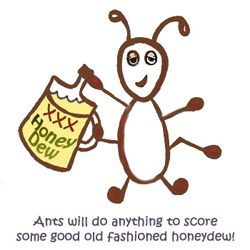
The honeydew that is being farmed by the ants might mold on your plant and this is the black sooty fungus you see near aphid colonies. The mold does not do as much damage as the symbiotic relationship between the ants and aphids. Several studies show that ants not only protect the aphids from ladybugs, parasitic wasps and lacewings, but they also make it possible to have bigger and longer lasting colonies with higher reproduction rates.
8. Counting aphids may not put you asleep, but it could help you determine your course of action.
Farms conduct sampling to determine if insecticides are needed to treat aphid infestations. The home gardener can use the same approach to identify the mildest and most effective method of pest control. The University of Minnesota Entomology Department created a worksheet for “speed scouting” for aphids on soybean crops.
If a plant has less than 40 aphids it was considered not to be infested. In your garden, you may want to use a similar approach. You can always check again in 3-5 days to see if numbers are increasing. If they are not increasing and your plants are healthy, it’s better to let nature take its course.
Here are some compelling reasons why avoiding chemicals and even natural deterrents and sprays is a good practice:
- Natural, organic and homemade deterrents and pesticides can harm beneficial insects. Insecticidal soaps kill soft bodied insects. Although they are more environmentally friendly than harsher chemicals, these soaps dry out the skin of a pest. However, since the larvae of the lacewing, syrpid fly and lady beetle are soft bodied, and these beneficial insects all feed on aphids during the larval stage, applying insecticidal soaps also poses a threat to our friends in the garden.
- Pepper spray and the capsaicin in it, is toxic and lethal to honey bees so mixing up a batch of hot pepper juice to apply to a wide area as a preventive measure may not be the best idea. It’s a pesticide that causes membrane damage. In addition, garlic, pepper and onions are used as repellents.
- Neem oil and horticultural oils are options but also can kill beneficial insects alongside the aphids. On the bright side, these oils won’t kill new insects that fly in after the application. Keep in mind soaps and oils are problematic when the weather heats up because they allow the plant to burn. Wait until the weather cools off or the sun goes down.
9. Avoid excessive fertilization with nitrogen!
Nitrogen encourages plants to grow more foliage and new shoots – an aphid delicacy! Excessive lush growth may look good to you but sap-sucking insects thrive on the nutrient-rich plant tissues, leading to a surge in their populations.
University research has extensively studied the correlation between nitrogen fertilization and aphid infestations. According to a study conducted by the Department of Entomology at Cornell University, “Nitrogen fertilization alters the outcome of plant competition, reducing insect herbivory,” increased nitrogen availability was found to positively influence aphid abundance, underscoring the need for careful nitrogen management to mitigate aphid-related issues in agricultural and horticultural systems.
10. Get out the hose, spray bottle, or small brush instead of a “can of death”.
Water can be used from a hose or spray bottle with just enough pressure to dislodge the insect, sending it to the ground. Aphids, as stated above, are not strong enough to find their way back.
What about neem?
Many gardeners swear by neem. Sorry to break the news but neem oil is not perfectly safe for bees and other beneficial insects. Although neem is a naturally derived insecticide, it can have unintended consequences on beneficial insects, including bees. Neem is perceived to have low toxicity to non-target organisms. However, research conducted by the Department of Entomology at the University of California, Davis, on neem oil and bees, highlights the potential risks associated with neem exposure to bees and other beneficial insects. Neem compounds, such as azadirachtin, can negatively affect bees through direct contact or ingestion, leading to impaired foraging behavior, reduced lifespan, and compromised colony health. Neem can also burn plants if applied when it is sunny out.
I’m so passionate about not using chemicals, neem, or homemade pepper sprays, that I wrote a fun and informative eBook about how you can protect your plants by understanding how pests and beneficial insects work.
It contains over 100 pages and more than 100 images. Check it out if you want to know how to manage pest pressure without overdoing it, so that your special ecosystem can thrive, naturally!
REFERENCES
Aphids, Penn State College of Agricultural Sciences, 2013, http://extension.psu.edu/plants/gardening/fphg/brambles/insects-mites/aphids
Aphids, University of Rhode Island landscape Horticulture Program, Factsheet, http://www.uri.edu/ce/factsheets/sheets/aphids.html
Aphid Pheromones, Dewhirst SY, Pickett JA, Hardie J., 2010, Biological Chemistry Department, Rothamsted Research, Harpenden, Herts, United Kingdom, http://www.ncbi.nlm.nih.gov/pubmed/20831961
Aphids in the Home Garden, Suzanne Wold-Burkness and Jeff Hahn, University of Minnesota, http://www1.extension.umn.edu/garden/insects/find/aphids-in-home-gardens/
Cunning Super-Parasitic Wasps Sniff out Protected Aphids and Overwhelm Their Defenses, Science Daily, February, 2012, http://www.sciencedaily.com/releases/2012/02/120224110739.htm
How to Manage Pests, Pests in Gardens and Landscapes, University of California Agriculture & Natural Resources, Statewide Integrated Pest management Program, July, 2013, http://www.ipm.ucdavis.edu/PMG/PESTNOTES/pn7404.html
ISU study: Aphid attacks weaken genetic defenses in soybeans, may open door for other pests, Iowa State University, October, 2012, http://www.news.iastate.edu/news/2012/10/15/soybeanaphid
Lady Beetles, Cornell University College of Agriculture and Life Sciences, Department of Entomology, http://www.biocontrol.entomology.cornell.edu/predators/ladybeetles.html
Speed Scouting for Soybean Aphid, E. Hodgson, B. McCornack, & D. Ragsdale, University of Minnesota Entomology Department, http://www.nwroc.umn.edu/prod/groups/cfans/@pub/@cfans/@nwroc/documents/asset/cfans_asset_311500.pdf
