

How long does it take to grow sweet potatoes in bags?
Most sweet varieties take between 85-120 days to mature. Some special types may require up to 180 days.
If you live in a cool climate or one with short summers, you may need to pick a variety that takes less time to grow. Keep reading to learn more about which variety might be best for you!
When is the best time to plant sweet potatoes?
Sweet potato slips are planted outside when all threat of frost is gone and when the weather in spring warms up. Sweet potatoes require a long growing season with warm days and nights. There should be 0% chance of frost and nighttime temperatures should reach 55°F (13°C) consistently.
Because sweet potatoes do not like cold weather, it’s not worth it to risk damage by planting them too early.
What are the best types of containers for growing sweet potatoes?
To grow many pounds of sweet potatoes, large containers with plenty of drainage holes are ideal.
Small plastic containers will NOT work well for sweet potatoes.
Is a deep container or a wide container best for growing sweet potatoes?
Sweet potatoes grow best where there is plenty of horizontal space. It’s better to have a wide pot, bag or container, than a skinny, tall one because sweet potatoes grow closer to the surface and spread out. The potatoes emerge from nodes found on the slips, and those slips are planted less than a foot deep.
Sites that recommend tall and skinny potato grow bags may not be giving the best advice. That is the technique used for traditional/Irish potatoes and it doesn’t work well for sweet potatoes. Check this post out if you want to learn how we grew traditional/Irish potatoes in potato bags, burlap sacks, or grow bags.
What are the benefits of non-woven, fabric grow bags?
Grow bags made of non-woven fabric promote drainage and allow better air circulation than plastic pots. Plants will usually not become root bound in a fabric grow bag. The roots are “air-pruned”, naturally.

Fabric grow bags are reusable! There are many uses for these versatile bags:
- When transplanting, throw empty nursery pots in a grow bag to keep them from blowing around in the wind. Keep your tools handy and off the ground.
- Use grow bags to store mulch and soil.
- Grow bags work great for keeping toys, shoes and stuff off the floor and contained.
- Grow bags are also wonderful for growing all kinds of crops, especially tomatoes. I’ve used 10-20 gallon grow bags to grow very productive tomatoes that reached 8 feet high!
What types of grow bags work well for sweet potatoes?
Grow bags that range from 20 gallons on up to 100 gallons work well. If you want to get a big harvest, grow several sweet potato slips and opt for the largest grow bag you can fill with good quality soil, to 12-18 inches deep. Top choices would be 100 gallon and 50 gallon sizes.
A 100-gallon grow bag is like a large, raised bed. If filled 12 inches deep (30.48 cm), a 100 gallon grow bag requires approximately 7.88 cubic feet / .29 cubic yards of soil.
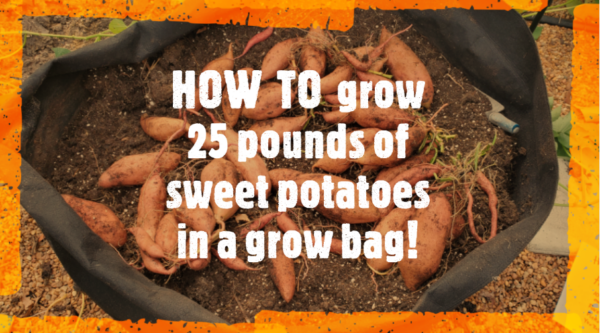
The dimensions of a 100 gallon grow bag can vary depending on the manufacturer. The one I used to grow over 25 pounds of sweet potatoes was similar to this 100 gallon grow bag on Amazon, 40″ in diameter and 20″ high. Shop around to find the best deal.
The grow bag I used like the one linked above is much deeper compared to other 100 gallon grow bags on the market. Make sure not to get something too shallow.
I filled it with 12 inches of soil. It was helpful to have extra material above soil level so that the soil wouldn’t wash out onto the ground when it rained or when I watered. I also saved money on soil! I usually get a huge delivery of compost each spring.
When looking at grow bag sizes, make sure to review the actual dimensions of the bag.
To grow sweet potatoes in bags, a 50 gallon (189 liters) grow bag would also provide ample room for the tubers to expand: approximate dimensions: 23.8″D x 23.8″W x 15.9″H.
If filled 12 inches deep (30.48 cm), a 50 gallon grow bag requires approximately 4.75 cubic feet / .18 cubic yards of soil. Here’s a link to an example of a 50 gallon grow bag on Amazon.
What are sweet potato slips?
Sweet potato slips are sprouts that are about 6-8 inches long that grow from a sweet potato. If you’ve seen potatoes sprout before, that is the start of a slip.
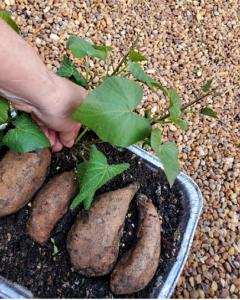
The slips are snapped off the potato and planted in soil to grow more sweet potatoes. It is not advisable to plant whole or cut up sweet potatoes in the ground. That technique is more suited to growing traditional Irish potatoes.
Can I grow sweet potatoes from potatoes bought at the grocery store?
The answer to that question is a resounding YES! I grew over 25 pounds of sweet potatoes from slips grown from grocery store tubers. We posted another video showing non-organic sweet potatoes sprouting.

A quick tip / warning: Non-organic tubers may not grow well if they have been sprayed with a growth inhibitor. Packages don’t always tell you if they are sprayed with a chemical.
Still, the package does not need to state “organic” for them to sprout. If you have sweet potatoes in your cupboard that are sprouting, you can continue to grow slips using the tips in this post.
The most common grocery store sweet potato variety is Beauregard. If you can find organic Beauregards locally, you’re in business!
Where do I buy sweet potato slips?
Sweet potato slips are widely available online and sometimes offered at farm and tractor supply stores, feed stores, and garden centers.
You can also opt to purchase sweet potato slips from professional growers. It’s fun to look at all the different offerings on the market today. Many have been bred to resist diseases and to grow best in specific climates and conditions.
What type of sweet potato should I grow?
Because sweet potatoes grow best in warm weather, if you’re summers are short, choose a variety that has a shorter growing season so they will have time to mature. You don’t want the potato plants to experience frost toward the end of their growth.
If you live in a warm climate or a location with long, warm summers, your options are more plentiful.
Here’s a handy list of some types of sweet potatoes and the approximate time in days that they need to mature:
- Bayou Belle 90-110 days
- Bellevue 110-120 days
- Burgundy 115-120 days
- Beauregard 90-100 days
- Centennial 90-100 days
- Charleston Purple 100-120 days
- Covington 110-120 days
- Jewel 115-120 days
- Garnet 100-110 days
- Georgia Jet 100 days
- Hernandez 115-120 days
- Murasaki (White sweet potato) 100-120 days
- O’Henry 90-100 days (White sweet potato. Great if you live where the summers are short.)
- Okinawa (Purple sweet potato) 120-180 days
- Porto Rico 110 days (Great for smaller containers because it is a “bush” type)
- Stokes Purple 120-140 days
- Vardaman 110 days
- Other purple varieties: All Purple, Molokai Purple’ Purple Delight, Purple Knight, and Purple Passion 120 days minimum
How many sweet potatoes will one slip grow?
This is a great question that is not always answered on other sites.
Each potato that you sprout will produce approximately 3-8 slips, maybe more!
Each slip has the potential to produce 3-8 potatoes. Some varieties may produce more per plant! The slip will grow and the nodes (bumps on the vine where leaves were once attached) will produce the potatoes.
Wow, that’s a lot of potatoes for little investment!
How do you grow your own sweet potato slips?
Start growing your sweet potato slips about 6-8 weeks before your last frost date in the spring.
What if my frost date is near? That’s ok, pot them up and you should get sprouts in time to plant. Sweet potato plants do not really “take off” until the really warm weather sets in.
What is the best method to sprout slips to grow sweet potatoes?
Some people sprout the potatoes in a jar of water with toothpicks inserted in the potato to hold the bottom half of the potato under the surface. I use a different method.
The best technique that I have found for growing sweet potato slips is to place the potatoes on their sides in soil, partly buried.
Use a pan with a tall rim or any container. No drainage holes needed. Keep the soil moist.
If you want to speed things up, place the pan on a seed mat. Seeds mats are electric mats that are normally used to start seeds. They raise the soil temperature by about 10-20°F (6-11°C).

Sweet potato plants like the warmth and this might promote growth faster than at normal room temperature. If you don’t have a seed mat, don’t worry, they will grow without it.
However, I love my seed mat for proofing bread dough. I use it for making pizza, pretzel and focaccia dough all the time! The dough rises without fail.
This is 10″ x 20.75″ seed mat is very much like the one I bought from Amazon over 8 years ago. Some days it has a bowl of dough on it and some days it has seed trays or sweet potatoes! I LOVE my seed mat for proofing bread and pizza dough!
How long does it take for sweet potato slips to grow?
Sweet potato slips should sprout in a couple of weeks and reach a good planting length in about 6-8 weeks.
The slips should be a minimum of 6 inches long before you snap them off the potato. The slips that you remove from the potato do not need roots to be planted outside in your bag.
What is the best soil for sweet potatoes?
To grow sweet potatoes in bags and containers, a 1:1 mix of rich compost and organic potting mix will provide nutrients, promote good drainage, and ensure the soil is loose enough for the sweet potatoes to expand easily.
I did not test pH or add additional fertilizer when I filled the grow bag, or even during the growing process. I found it is not necessary!
However, I did opt to drench the soil with liquid worm castings a few times because I LOVE how worm castings improve everything! If you like to compost with worms, check out my post about what red wiggler worms like to eat.
How deep does the soil need to be for sweet potatoes?
Fill your container at least 12 inches deep. Many websites will insist a minimum soil depth of 16 inches (40.64 cm) is needed. However, we used 12 inches and got a GREAT yield, saving us time and money.
What kind of soil and compost are the best to grow sweet potatoes in bags?
Rich, sandy soil containing a good quality compost works great! A little clay is fine, but compacted clay or rocky soils will not produce good results.
Compost that comes from various sources will contain lots of nutrients, promoting the growth of large, beautiful sweet potatoes. Low grade compost is made from very few materials, resulting in very few nutrients, and this may impact your crop negatively.
Compost made from municipal trash is not suggested unless it is expertly processed. You don’t know if residual chemicals remain, such as herbicides and medical waste.
If you use a quality compost in your soil mix, you should not need to apply fertilizer during the entire growing process.
Instructions for planting sweet potato slips
It’s an easy process to plant sweet potato slips in a container, grow bag or garden bed.
- Pick a location that is in full sun and is well draining. Don’t let your container sit in standing water or in a low spot that floods.
- Plant the slips once all threat of frost is gone in late spring, once warm weather sets. Even better if outside temperature readings are consistently over 65°F (18.3°C).

- Snap the slips off the sweet potatoes. Ideally, the slips will be at least 6 inches long. They do NOT need to have roots!
- Remove the lower leaves from the slips. Keep two sets of leaves on top of the slip and remove the remaining leaves near the bottom portion of the slip. Sweet potatoes will grow from the nodes that once had leaves!
- Bury the slips at an angle with the remaining leaves above soil level. Plant the slips 2-3 inches deep, and 10-14 inches apart. The leaves above the soil line will capture energy from the sun to help the plant grow.
- Keep the soil damp. Don’t let the plants dry out, especially in hot weather.
How fast do sweet potatoes grow?
Sweet Potatoes may start off slowly. They will begin to flourish once temps reach 80°F (26.6°C).
It will take a minimum of three months for sweet potatoes to mature. Refer to the list above for the approximate number of days to harvest for many popular varieties.
Do I prune sweet potato vines?
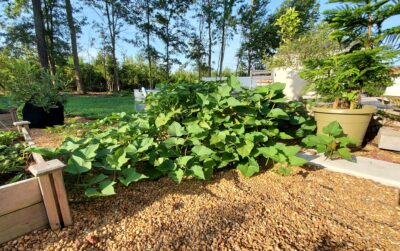
No need to prune. In fact, the vines can be used as a beautiful landscape feature!
Sweet potato vines cascade beautifully and look amazing in large pots. They can be very ornamental.
What are some tips for northern gardeners for growing sweet potatoes in grow bags?
If you live in a northern climate, you may want to give the soil a head-start by warming it up. You can warm up a raised bed or container by covering it in red or black plastic for 3 weeks before planting.
Choose sweet potato varieties that take less time to mature, also known as “short-season” types. See the list above.
When do you harvest sweet potatoes?
There are some “golden” rules for harvesting sweet potatoes:
- When the tips of the vines start to turn yellow, that signals that the harvest is near. Pick a dry day in the next couple of weeks to harvest. Stop watering a week before harvest.
- In northern climates, harvest just before the first frost. Find out when your first frost date is and harvest two weeks before then if possible.
- It’s a good idea to get the potatoes out of the ground before the soil temperature goes below 55°F (12.8°C). I like this site, GreencastOnline for checking my soil temperature. All I do is enter my zip code!
How do you harvest sweet potatoes?
It will make it a lot easier to harvest the sweet potatoes if you cut the vines off first.
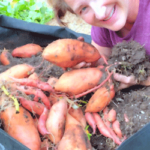
Carefully dig around each slip and take care not to nick the skin of the potatoes. Sweet potatoes will grow closer to the top of the container.
If you can lift your container, turn it over and dump the contents out on a tarp, the ground or a wheelbarrow. There is no way I could lift a 100-gallon grow bag. That’s ok. It was fun to go on a treasure hunt.
Each slip turns into a plant. Each plant will grow 3-8+ tubers! Potato variety, climate and soil will alter results.
Do I need to cure sweet potatoes before eating?
Yes, it’s important to let the potatoes cure before eating so they will develop sweetness and a proper skin.
Bring inside to a warm area out of the sun for 10 days. Do not cure in direct sun.
I discovered the curing process does not need to be perfect! A warm, humid spot in the house or garage for a week is fine.
How do I grow sweet potatoes with the best flavor?
- Sweet potatoes don’t like to dry out. Keep the soil moist but not soggy.
- Use a good quality compost. Old soil that has been depleted of nutrients won’t work well.
- After curing for 10 days, give them another month before eating to develop the best flavor.
What is the ideal storage temperature for sweet potatoes?
Ideal storage temperature after curing is 55-60°F (12.7-15.5°C).

How do I keep disease from ruining my sweet potatoes?
There are several tactics you can deploy to prevent disease from wreaking havoc on your potato patch:
- Choose a potato variety that resists certain diseases. You may already know what types of diseases are prevalent in your area. Avoid the types that are more prone to those diseases.
- Use “certified” slips from professional growers. They are in the business of offering disease free plants.
- Rotate plants in the garden. Do not use the same soil you used the previous year to grow sweet potatoes or any plants that are susceptible to the same diseases:
- Leaf spot fungus
- Black rot
- Fungal diseases like southern blight
- Root-knot nematode
- Weevil grubs
I hope you find this information helpful. It’s something I refer to yearly when I’m gearing up to grow some SWEETS!
