
Overrun with Monarchs!
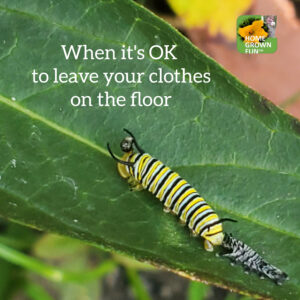
I couldn’t believe my luck in 2022 when I had so many monarch caterpillars on 6 milkweed plants I had to watch where I stepped! Hundreds! When it was time to pupate, the caterpillars dispersed to the towering okra plants, Malabar spinach, house foundation, hose spigot, spa ledge, plant pots and more. I’ll write another post showing how beautiful the chrysalises were everywhere around the garden.
Meager Milkweed
With this great fortune came an urgent problem. Some may not have reached the final instar (5th molting and growth stage) because I ran out of milkweed! The leaves on the plants were picked clean. There were small caterpillars with nothing to eat.
Supplemented by Butternut Squash
And as they say, “desperate times call for desperate measures”, I walked over to the squash patch and picked a butternut. I sliced it up into thing rings and placed it on the branches, sort of like ring toss. I was astounded that not only did the monarch caterpillars eat the squash, they devoured it!
It’s important to note that while monarch caterpillars may consume butternut squash as a supplemental food source, it is not their natural or ideal diet. Milkweed plants contain specific chemicals that are crucial for the caterpillars’ growth, survival, and defense mechanisms. Therefore, it’s essential to provide monarch caterpillars with milkweed whenever possible to ensure their optimal development and survival.
Monarch caterpillars, scientifically known as Danaus plexippus, primarily feed on milkweed plants (Asclepias spp.) as their main food source. However, in certain circumstances, they may consume other plants, including butternut squash (Cucurbita moschata), to sustain themselves and complete their final instars before pupation.
Butternut Bonus
It just so happens that butternut squash resists damage from the squash vine borer because its stems are not preferred for egg laying because they are too hard. Bonus!
While milkweed is the preferred food for monarch caterpillars due to its specific nutritional composition, including cardiac glycosides that provide defense against predators, butternut squash can serve as a temporary substitute when milkweed is scarce or unavailable. Butternut squash, like other members of the Cucurbitaceae family, contains various nutrients that can support the caterpillars’ growth and development.
Butternut squash is rich in carbohydrates, which provide energy for the caterpillars’ metabolic activities and growth. The sugars present in the squash, such as glucose and fructose, are valuable sources of quick energy. Additionally, the caterpillars may derive essential vitamins and minerals from butternut squash, including vitamin A, vitamin C, potassium, and magnesium, among others. These nutrients contribute to their overall health and physiological processes.
One Milkweed Plant Does Not Cut It
A good friend asked where I got my milkweed. He planned to grow one plant hoping the monarchs would come. I strongly recommended he get at least three plants or none at all. If he attracts monarchs into his garden but cannot sustain them, he is not helping to “save the monarchs” at all.
In another post I go over the types of milkweed that are the best and what imposters to avoid.
Personal Responsibility Before Natural Selection
Finally, monarchs sometimes do not fully complete their lifecycle, and this could be caused by many factors other than lack of nutrition. It’s our responsibility to learn how to prevent unnecessary harm to creatures we coax into our backyards. For monarchs, this equates to appropriate habitat, adequate food sources and avoiding exposure to pesticides and other harmful substances.
If you spray chemicals in your garden, you may be interrupting the signals that monarchs pick up on to find the milkweed and worse, you may be harming their overall health both immediately and long term.