

Forgetting to turn the water off is a common homeowner problem
Do you water your garden and leave the hose running while you take care of other tasks, only to forget the hose is still going, after hours or even days? You’re not alone. It’s frustrating to waste water and money.
A Simple Fix
If you’re absent-minded or just have a lot going on, install a timer onto your outdoor faucet.
- Did you really intend to create a pond for all those ducks in your small backyard?
- Is that a river at the edge of the street or are you watering the gutter?
- Are you ready to tell your kids you can’t help with college because you’re bankrupt from a massive water bill?
Mechanical Timers
A mechanical timer works much like an old-fashioned kitchen egg timer. Wind a dial to set a time limit, and when it expires the flow stops. No batteries or electricity needed.
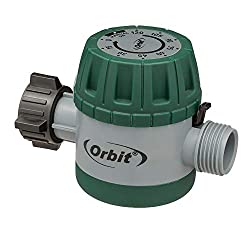
The item I purchased is shown below. Before you buy, read about some of the pitfalls of this particular timer. Have realistic expectations and embrace it for what it is – a cheap plastic gadget that will get the job done, and maybe last a few years tops, if you’re lucky.
If you click the link and buy the timer, I might get a tiny commission from the sale.
My timer is still working fine after more than 3 months.
The unit is easy to install. Just screw it into the faucet end. When it’s time to water, set the dial to a number between 15 and 120 minutes and turn the faucet on.
IMPORTANT INSTRUCTIONS
I overlooked these important instructions and wonder if other people are not following them, potentially resulting in negative reviews.
- To turn the water off before the time runs out, turn the timer back to zero and lift up on the black release lever to turn it off.
- To use it without the timer to manually water, depress the black release lever and rotate the lever to “Manual On”. To turn the water off, Rotate to 0 and push up on the release level to turn the water off.
PROS:
- Simple mechanical device, just like an egg timer.
- Easy installation – ready to use directly out of the box.
- No batteries required.
- Large dial face is easy to read.
- Has a manual override option that allows use of the hose without removing the timer.
- 7-Year Limited Warranty 1-800-488-6156. Proof of purchase required.
CONS:
- It’s not built to last a lifetime.
- Parts break.
- Several reviewers reported that the timer failed to stop the water when the time expired. Read on for a tip related to that issue.
Wind’er Up
Many people reported in reviews on Amazon that the timer would not shut the water off. One reviewer educated the universe by explaining that the clockwork spring needs to be wound up to get the power it needs to complete the cycle and turn off the water.
To set the timer to a lower number of minutes such as 15 or 30, turn the dial to the highest number first, and then back to the desired amount of time. Be careful not to break the contraption or your wrist while turning it excitedly.
Shut the Water Off at the Source
Water pressure still exists at the source. The maker of this product is not manufacturing an impenetrable, water stoppage device as strong as the Hoover Dam, for less 10 bucks.
If you leave the faucet on and the unit fails, water will leak or even flow out – depending on your luck when it comes to disasters. Therefore, it’s a good idea to turn the faucet off whenever it’s not in use.
Do not leave your home to take a flight to Europe expecting this contraption to hold back the water for two weeks. Life doesn’t work that way.
The Sun Damages Plastics
Damage caused by the hot sun has been reported. Sun can break plastics down. If you sat in the direct sun every day for five months, holding a thick plastic cup, without any kind of protection, not even a wide brimmed hat to cast shade on the cup, would you agree that the cup might weaken? A good way to prevent the plastic from degrading in the sun is to cover it with shade cloth.
Don’t Use the Timer in Winter
If you live in a cold climate, this item is good for four – five months. That means it will cost you a little over two dollars a month to use this particular timer. If you live in Southern California or a temperate climate, you just slashed the burden in half.
Before frost hits your area, you should remove and store the timer. If not removed, the plastic may crack due to temperature extremes or water expansion during a freeze. If they made the timer out of polypropylene or PVC it it would hold up, but then the timer would cost more.
Mesh Filter
I initially thought the mesh filter was unnecessary, but once I saw the scale and crud that existed in my outdoor faucet, I conceded that it’s a good thing to keep the filter in the timer. Check it from time to time, if the urge hits you. If water flow subsides, clean and reinstall it.
Do I recommend this product?
Yes, but with these warnings:
- Don’t expect perfection
- Don’t set it and leave your house overnight
- Take care of it in extreme weather conditions
