


This is the ultimate guide on putting together a DIY Stock Tank Pool WITHOUT any tools or drilling!
If you’re looking for an easy way to set up a stock tank, without the trouble of drilling holes in the side, you’ve come to the right place. I have 20 essential tips that ensure you have all the intel you need to set one up.
1. Why Set Up a Stock Tank Pool?
Stock tank pools are a clever way to stay cool and have fun with relatively little investment! Sure, it’s not as glamorous as a $45,000 backyard pool, or as as deep as an above ground pool, but it is a solution that does the trick with way less commitment, maintenance and expense!
A stock tank pool is great for one person, a couple or even a whole family, depending on how close you are!
An above ground pool is also fairly easy to set up but it will require more attention and is susceptible to rips, tears and sun damage. They can look junky over time and disassembly can be a chore.
2. Why not drill holes in the sides?
- Drilling the holes requires a special drill attachment and precision
- Holes need to be done correctly the first time
- Holes need to be sealed to prevent leaks
- We may want to sell the stock tank pool later and will get a better price for it without holes
3. Is it really difficult to drill holes?
Handy people will have no trouble measuring and making sure the drilled holes are perfect. They are not intimidated about drill attachments and have confidence that they will not make a mistake. If you want to have a sleeker look, by all means find a good tutorial and drill the holes!
If you don’t care that pool pump hoses will be draped over the side, just get the tank, put it on level ground, clamp the hoses in place, prime the pump, and set it to filter every day for an hour.
4. What is a stock tank?
A stock tank is normally used by farmers and is filled with water for livestock. It’s made of galvanized steel with a zinc finish to keep it cool for the animals. We’re going to use it to relax and have fun!
The day I bought our stock tank on a whim, I told the girls, “Let’s get in the truck, we’re heading to Tractor Supply to get us a giant metal bowl you can swim in!”. They looked at me funny but came along for the ride with smiles on their faces!
5. Where do you buy a stock tank and how do you get it home?
Look for stock tanks at farm supply stores. Tractor Supply is a good first stop. Get it delivered or use a truck. We have a short bed truck. It will lean over the edge so be prepared to drive more cautiously.
6. How much is an 8 foot, galvanized steel, stock tank?
When something becomes popular, high demand will cause availability and price issues. A reasonable price for a stock tank that measures 8 feet wide (2.44 meters) by 2 feet (.61 meters) deep, is between $399 – $599 USD plus tax.
Prices have gone up significantly since 2019 when we first set one up. Make sure you are given the drain plug! We almost drove away without it.
7. Are there other options instead of steel?
Yes, there are other tanks out there that I have considered ordering online that are deeper and wider, but ultimately more expensive and difficult to obtain. The shipping alone can be costly.
8. Why don’t I just drill holes and get it over with?
Fitting the pump hoses directly into the side of the pool does make for a streamlined design. However, you will need gaskets, valves, waterproof sealant, more strainer attachments, and a drill attachment. We prefer to simply drape the pump hose over the edge.
What kind of lazy bum skips the holes?
A stock tank pool without drilled holes for the pump may be a great option for people like me who:
- Are not handy when it comes to certain things (but I can cook an amazing loaf of sourdough)
- Don’t feel like learning the skills at this time
- Can’t find their drill, doesn’t know where it is stored or just not in the mood to use it
- Don’t want to source the drill attachment needed
- Don’t feel like getting the tools out and being precise
- Don’t want to ask my husband (or partner, friend) for help
- Too hot, tired or impatient to deal with anything else LOL!
9. Are there disadvantages with not drilling holes in the stock tank to install hose connectors?
- Yes – aesthetics. Draping the hoses over the side may not be aesthetically pleasing to some. However, I consider it a smart solution. And let’s face it… a stock tank is not that fancy in the first place. I vote for the “I like simple” look.
- You will have to prime the pump once a season. Because the hoses will be draped over the edge of the pool, water will not be feeding into the pump the first time you fire it up. More on how to prime the pump below.
10. What supplies do I need for the easiest set up of a stock tank pool?
Below is a list of supplies for a stock tank pool with NO holes drilled in the sides:
- Stock Tank. We have an 8 foot / 2.44 meter in diameter stock tank. We are a tall family. When I sit down, the water goes over the chest nicely. At only 2 feet deep (.61 meters), it feels sufficient and does not seem like we’re hanging out in a puddle. Cost in 2019 was $400 USD. In 2023, $599. In 2025 a 700 gallon tank is $550.
- Pool pump and filter. It’s inevitable that bacteria and fungus will grow if there is no circulation. Leaves and other organic matter will drop in and start to decay. It is highly likely the stock tank will get green and gross if you do not use a pump. It’s not necessary to get a large pump system. However, you do need to circulate the water through some kind of filter. This sand filter is ideal. I’ll explain more below why I like sand filters better than the cheap pumps with paper cartridges.
- Sand or Filter Balls. You can pick up a bag of pool sand at a supply store or get these filter balls.
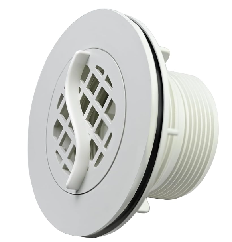
Example strainer attachment for the pool pump hoses - Strainer end attachment. Essential for preventing small debris from entering the pool pump and keeping tiny hands safe. Here is a link to a strainer attachment that should fit a pool pump with 1.5″ hoses. If your pump hose is 1-1/4″ and not 1-1/2″, you will need a (1-1/4″ to 1-1/2″) adapter for 1-1/4″ hoses.
- Long zip ties or nylon string. Use with clamps to keep the hoses in position as they drape over the side of the pool. Simply put a tie around the hose and insert the clamp into the loop before clamping onto the edge of the pool. Use white zip ties if you want them to blend in with the hoses for a cleaner look. Walmart or a hardware store has zip ties or if you’re ordering online, these white ones are $4.
- Large clamps to use with the zip ties to hold the hoses in position on the side of the pool as described above. The clamps do not need to go around the hoses, just through the zip ties and onto the edge of the stock tank. We use these type of clamps.
- Skimmer net. A must-have to capture debris by hand before it sinks to the bottom of the pool and adds organic matter to the water, causing boggy conditions. They are inexpensive and way worth it! Here’s the one we bought. You could also use an old kitchen pasta strainer lol. Or screening wrapped around sticks. Don’t laugh. I did that for a time.
- Cover to keep debris out. This could be as simple as a tarp with rocks holding the edges down on the ground (did that too) or a cover that is meant for a pool. I recommend a solar cover like the one I have because it sits on top of the water and does not let water collect in the middle. Although it is marketed as a solar cover, it only heat up the top 2-3 inches. I love how it stays on in high winds and it is simply placed on top, no elastic, clamps or attachments needed.
- Chlorine is somewhat of a “must”. Just a tiny bit makes a big difference. It’s important not to allow your stock tank to develop bacteria. Small, 1-inch chlorine tablets work best for a stock tank pool. You would drop one in a floating dispenser and allow it to disintegrate gradually. Do not add tablets to the pool directly because they might sink and cause the tank to develop rusty spots.
- Chlorine dispenser. This inexpensive floating dispenser works great and can be covered by the pool cover without any issue.
11. What tools and parts do you NOT need:
- No need for a drill or special drill attachment
- No need for special, flat strainer attachments that fit snug up againts the metal sides
- No waterproof sealant
- There is also no need to buy plunger valves. Plunger valves control the flow of water to and from the pump so that connections can be removed and put back on without water gushing from the pool to the outside. Since you are not using gravity to feed water into your pump from the pool, you don’t need these valve attachments.
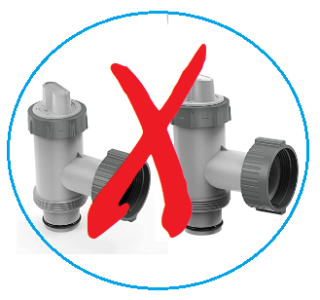
You don’t need plunger valves if you are not drilling holes in the side of the stock tank.
12. What types of pool filter pumps work well with a stock tank?
First of all, do you even need one? As mentioned above, YES, standing water is a breeding ground for mosquitoes and bacteria. And don’t forget humans. We contribute a good amount of bacteria to the stock tank.
What kind of filter pump should I get for the stock tank pool? A stock tank pool is small compared to most pools so you can get away with purchasing the smallest, least powerful pool filter pump. However, the cheap, filters with disposable cartridges will not suck up sand on the bottom of the pool. The manufacturer recommends cartridges be replaced every 2 weeks.
I like to use my pool after gardening and it gets some dirt in it. So the pump needs to have enough power to get that out. That’s why we prefer a pump with a sand filter.
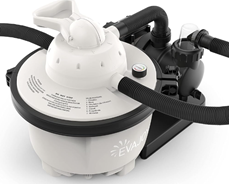
Is a sand filter overkill? If the price is right and the sand filter is made for a small-medium size pool, consider getting one to save the hassle of replacing cartridges that don’t work that well. In a sand filter, there are no cartridges to clean or replace, and the power of a sand filter pump ensure your stick tank is crystal clear. The cost will work out to be almost the same once you factor in the cartridges.
Sand pumps do require backwashing at start up and then periodically as necessary. However, one bag of pool filter sand lasts an entire summer. Or you could try those new fangles filter balls.
If things get really dirty you might have to replace the sand once a season. But if rinsed and backwashed properly, the sand should last a long time.
13. Do end strainer attachments come with the pool filter pump hoses?
Unfortunately, usually not. When buying a pool pump and filter, realize that the hoses included will not come with end attachments that prevent large debris from being sucked into the hoses. Those attachments are usually attached to the above ground pool.
14. Is a pool cover necessary for a stock tank pool?
Yes, if you do not use a pool cover, large debris can fall in and add bacteria to the water. Depending on where you put the pool, you may not need one. However, we have a lot of trees nearby and the wind blows the leaves everywhere.
Another advantage of a cover is the water is less likely to grow algae because the cover shields some of the sun.
A tarp will work. The first season I used a tarp and a large elastic chord around perimeter of the stock tank. I then added an inflatable tube under the tarp to create pitched sides, ensuring water would not pool and stand in the middle.
A solar pool cover that fits an 8ft pool is better. It lays on top and stays put from natural surface tension, even in strong winds. The second season I purchased a cover that is the same width as the pool. No sides to secure down. It stays put because of the natural tension of the water. It was inexpensive, under $25. However, when Covid hit the price escalated to over $100! Ridiculous. You should be able to find it at a reasonable price now.
It also warms the water in spring and fall. And despite what it seems, it actually keeps the pool cooler in the summer! It may be marketed as a a cover that heats up the water but realize it will heat up the top 2-3 inches and the water beneath that will not be impacted much. The water will remain cool but not too cold.
15. What are some things to be careful about when using a stock tank pool? Any Warnings?
Here are some essential cautions that I hope help to keep you and your families safe:
- If you have children that will put their hands inside these hoses, definitely get end attachments or use a reliable method to stop hands or objects from entering the ends of the hoses.
- Never leave children unattended in the pool and watch them carefully. Brief them beforehand and insist that they not play with the hoses, pump or electrical cords.
- Always be aware of the activity in your pool. Children can drown in just a small amount of water. Do not assume that because the pool is shallow, children are safe to swim or play alone.
- Ensure you do not install a heavy stock tank on top of a platform that cannot hold the weight. A full stock tank weighs more than a large Sport Utility Vehicle (SUV).
16. What are some optional supplies that make a stock tank pool fun?
- We love and use this inexpensive hammock pool float. Once you lay back in it and relax, it’s easy to forget that you’re in two feet of water and an 8-foot tub!
17. How do I prime the pump the first time and set up the hoses to work together efficiently?
Because the hoses will drape over the side of the stock tank, the flow of water into the hoses is not automatic the first time you set the pump up. To start your pump up for the first time, you will have to add water to the hoses and keep the water fully flowing to ensure air does not get sucked in.
I simply dunk the hoses, fill with water and even turn on my backyard hose and insert it in the pump hoses to ensure there’s plenty of water and little to no air. Carefully read the directions to the pump that you have chosen.
Tips for draping the hoses over the edge.
Simply drape the hoses over the edge and use large clamps and zip ties to hold the hoses in place. The key is to ensure the hoses do not come up and out of the water (or you will have to prime them again). You also do want the pump to suck air in instead of water. You could potentially damage the pump.
What if the hoses float?
To hold the hoses down into the water, close to the bottom, attach a weight to the bottom of the hoses. I have used rocks, yes rocks, attached with zip ties! I channeled the Flintstones! Or attach an old coffee mug with a zip tie.
Does it matter which direction the hoses face?
Position the hose ends to face the opposite directions. The hose that pushes water out should direct water around the pool toward the other hose that will suck the water up. This creates a current that moves debris toward the hose that will draw dirty water into the pump to be filtered.
18. How do I prepare the ground under the stock tank pool?
Partially or fully bury the tank for a sleek look. If you would like your stock tank buried or partially buried, dig out the spot, ensure it’s level and use a few inches of sand if the ground is not stable or smooth.
Pea gravel is ok as long as it is pea size. Large rock is not good. It will dent the bottom and potentially cause rust or worse cracks over time. If placing on tar or cement, consider first installing a rubber mat or an outdoor rug underneath to soften the contact.
If you don’t care that your grass will die, place it on top of grass or soft ground for the most comfort.
19. Are there downsides of burying the tank in thew ground?
Yes! Digging is hard work, especially if you have heavy clay and terrible drainage.
Also, draining the tank is more complicated. it will require a pump or use gravity by sucking water through a hose. It’s a pain. I know, I’ve done it!
If you want to lift the tank out later it will be a chore! I know, I’ve done it. My preference is not buried.
Does it have to be level?
Yes, as level as possible. Use a level to make sure your stock tank won’t be crooked. The water line will look really weird if the tank is dipping to one side
20. Do not place a stock tank on a deck or platform that cannot handle the weight.
ABSOLUTELY DO NOT RECOMMEND placing the tank on a wooden deck or any platform that cannot handle the weight of that much water, in addition to the people inside and around the pool. Once filled, the stock tank pool will weight as much as a 6 full-size pool tables stacked on top of each other!
21. How much water does a stock tank pool hold? How much does a full stock tank weigh? Can it withstand jumping?
An 8-foot / 2.44 meter diameter stock tank holds 700 gallons of water! It is 24 inches deep and weighs 6676 pounds / 3028 kilograms.
Do not jump from a platform or deck into a stock tank pool. The seams are soldered and if you take care not to place the tank on rocky surfaces and don’t jump excessively on the seams.
Think of a disposable aluminum baking pan and how it would fare if you placed it on top of a sand base and dropped a bag of flour in it. Tanks have seams and it’s best to not constantly put pressure on those.
The seams should not cut small feet but it’s still best to be careful and check it before you allow children to swim. If you have any concerns, have them wear water shoes. Always supervise as appropriate.
22. How to prevent a stock tank pool from turning green:
A stock tank pool should not turn green if it is cleaned by a pool filter pump, has been screened regularly to remove debris, and is disinfected with a small amount of chlorine. Here are some tips for keeping the tank crystal clear:
- Use small, 1 inch chlorine tablets inside a floating dispenser and add a new tablet every 1-3 weeks. If you cannot find the small tablets at a reasonable price, put granular chlorine in a small container that you have modified with a small hole so that the chlorine can gradually seep out an dissolve. Place that little container of chlorine inside your floating dispenser!
- The pump does not need to run for hours. The pump you set up will most likely be made for a larger pool and unless you have extra dirty people entering the tank, one hour a day should keep your pool sparking clean. Run it more if you find it needs extra time.
- Do not let the pool go for days without the pump operating if you can help it.
- Use a screen to remove bugs and debris by hand. You may need to stir up the water to screen out more.
- If you end up with green sides, you may need to take a clean broom and brush the tank, then modify or improve your pump running time, hand cleaning methods and chlorine amounts.
- Cover your stock tank pool. This goes a long way to keep it clean.
23. How hot does a stock tank pool get?
The pool will warm up during summer, especially if you live in a warm climate that experiences warm nights. It will still feel refreshing on an extra hot, humid afternoon – especially after doing yard work. In the two seasons we’ve had the tank, it has not reached a temperature that was too warm to enjoy.
If your nights cool off a bit, the water temperature will also drop some.
24. How to store a stock tank pool in the colder months or for long periods not in use?
Whether you keep your stock tank up during winter depends on your climate. If you are in a tropical region, why not keep it going?
If it gets too cold to swim, it’s time to put the tank up for the winter.
- Drain the pool and tip it up (with help) to get all the water out if possible.
- Disconnect the pump, drain it well and store the pump inside for the winter. If you’re using a sand filter pump, empty the sand and dry all items before storage. Coat any gaskets with something like Vaseline.
- Store the cover, net, chlorine tablets, and floating chlorine tablet dispenser inside during winter in a dry location.
- Turn the stock tank upside down and keep it in the same spot if it will not look like an eyesore. If you want it out of the way totally and have the space, roll it on it’s side and place upside down in another location. You can also keep it on its side against a strong tree facing down so water will not collect in it. I would not do this if there is any chance that children could play near it.
Covering the stock tank during the winter is an option but you will potentially find that the cover will not hold the weight of the snow and you certainly do not want water collecting in the tank that cannot be cleaned.
Don’t recommend letting water freeze in the tank or turning the tank into an ice rink. I’m not sure if the tank would get damaged.
25. What are some design ideas for a stock tank pool?
- Paint the exterior of your stock tank, black, white or another color that makes you happy! Ask your paint expert what you should use for the best results. We DO NOT recommend painting the interior, not even with marine-grade paint.
- Use outdoor rugs in front of or around your stock tank.
- Plant beautiful plants nearby that will not drop leaves or flowers into the tank.
- Build a deck around the stock tank.
- Set up screening around the stock tank for privacy or a feeling of intimacy.
- Add chairs and loungers to make a “hangout”. Add a firepit nearby! I have not tried heating the water with fire and will not be offering a tutorial on that this year 🙂
- Decorate the space to look like a tropical paradise, desert oasis, or modern retreat.
- Find a floating chair that suits your fancy, close your eyes and you might forget where you’re floating.
Final Tips for Setting Up a Stock Tank Pool
A stock tank pool may not be your ultimate lifetime goal for backyard enjoyment but a quick look around the Internet, Pinterest and other sites, and you will quickly find many exciting ideas for creating a tiny oasis in your backyard that integrates nicely with your design style and landscaping.
A stock tank pool is small but somehow feels refreshing on an extra hot, humid afternoon – especially after doing yard work. My engineer husband just remarked, “I would have never thought this thing would be as refreshing as it is!”
You don’t have to be a hillbilly to like the idea of a stock tank pool!
